


From Uncertainty to Implementation: Environmental Forum 2026 Explores Europe’s Path to a Competitive Energy Future
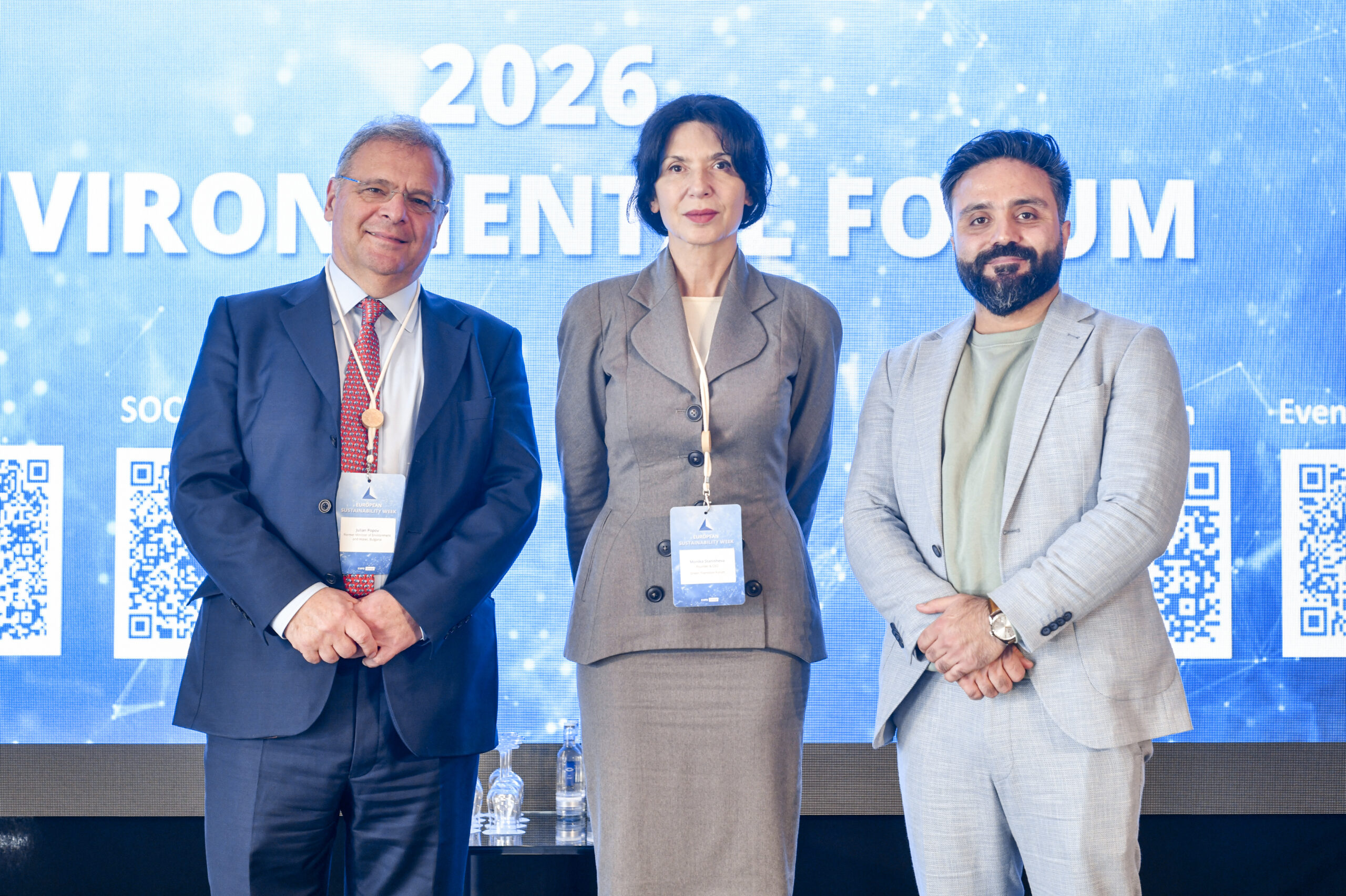
IMAGE: Fireside Chat with Julian Popov and Monika Stanisheva
Bonn, November 25, 2026: As part of the European Sustainability Week 2026, the EUPD Group brought together representatives from politics, industry, and the energy sector at the Steigenberger Icon Grandhotel & Spa on the Petersberg near Bonn on November 24, 2026, to discuss the next phase of Europe’s energy transition.
Building on the discussions at the ESG Summit 2025, which highlighted regulatory uncertainty and the growing importance of renewable energy in the commercial and industrial (C&I) sector, this year’s European Sustainability Week introduced a dedicated Environmental Forum. By giving the energy transition its own platform, the EUPD Group created greater room for in-depth discussions on regulatory developments, emerging business models, and the changing needs of European energy customers. Under the theme “From Energy Transition to Business Advantage”, the forum addressed a central question: How can Europe turn technological progress and market potential into economically viable solutions and lasting competitive advantages?
“Bulgaria became more closely connected to the regional electricity market, particularly with Greece and with Romania. And this actually created opportunities to sell electricity across borders and gave investors a more meaningful commercial market.” – Monika Stanisheva, Founder & CEO, Green Transition Forum.
Regulation and Competitiveness: From Uncertainty to Action
The forum opened with Prof. Dr Benno Werlen, UNESCO Chair on Global Understanding for Sustainability at the University of Jena and initiator or The Jena Declaration, addressing the cultural dimension of sustainability. “Europe’s energy transition is no longer just about setting ambitious targets. It is about creating the conditions to turn those ambitions into reality. Clear regulatory frameworks, investment certainty, and stronger cooperation between policymakers and industry will be essential to making sustainability a driver of long-term competitiveness”, said Daniel Fuchs, Chief Customer Officer of the EUPD Group.
Regulatory uncertainty, already a central concern in 2025, remains a challenge for investment and industrial transformation. However, additional questions surrounding energy security, international supply chains, cybersecurity, and Europe’s industrial competitiveness have become increasingly relevant. These developments formed the basis for discussions involving Monika Stanisheva, Founder & CEO of the Green Transition Forum, and Julian Popov, Former Minister of Environment and Water of Bulgaria, examining Europe’s evolving regulatory roadmap and its implications for the energy transition.
“For renewable energy and for batteries we don’t need grants. We need faster permitting, we need infrastructure, we need grid development.” – Julian Popov, Former Minister of Environment and Water of Bulgaria.
The perspective of corporate energy customers was further addressed in the stakeholder roundtable with Katharina Tomoff, SVP Global Environment, Social and Governance at DHL Supply Chain, and Floris Wolters, Senior Key Account Manager DACH / BENELUX at Solplanet.
Katharina Tomoff illustrated how businesses can align environmental protection with economic performance through DHL’s “burn less and burn clean” approach, prioritizing operational efficiency before investing in cleaner technologies. “What you don’t burn, you don’t have to pay,” she emphasized, highlighting the direct economic benefits of reducing fuel consumption.
Europe’s C&I Market: From Technology Adoption to Business Value
The transformation of the C&I energy market, already identified as a major growth opportunity in 2025, has entered a new phase. While the need for integrated photovoltaic, battery storage, and energy management solutions remains, attention is increasingly shifting towards their economic viability, flexibility, and long-term value. Through its independent market research and international industry network, the EUPD Group continues to provide a platform for informed discussion and collaboration, supporting the transition from market opportunities to practical, sustainable business solutions.
According to the EUPD Group’s latest market outlook, annual solar PV installations in Europe (EU-27 plus UK, Switzerland, Norway and Ukraine) are expected to stabilise at around 79 GWdc in 2026 and 2027. Battery energy storage, meanwhile, continues to expand, with projected annual installations of approximately 69 GWh in 2026 and 72 GWh in 2027. These developments underline the changing market dynamics: while utility-scale storage remains the dominant growth segment, commercial and industrial customers are increasingly exploring integrated solutions to improve energy cost predictability, operational flexibility, and security of supply.
During the session “The Evolution of the C&I Market”, the EUPD Group presented its latest market insights, complemented by Michael Gutwein, Solution Manager at GoodWe Europe, who addressed the business case for C&I solar and storage.
A particular highlight was the subsequent fireside chat between Dr Andreas Piepenbrink, CEO of E3/DC by HagerEnergy, and Markus A.W. Hoehner, Chief Executive Officer and Founder of the EUPD Group. Under the title “Solar Overload or Dumb Grids? Flexibility as the New Currency”, the discussion explored the evolving expectations of corporate energy customers and the challenges of translating market opportunities into successful business solutions.
From Energy Supplier to Energy Partner
Dr Claudia Häpp, Senior Vice President Future Energy Home at E.ON Germany, provided a strategic perspective on the European utility market. Thomas Meisberger, Key Account Manager DACH at SolaX Power, further elaborated on the future role of the utilities, moving from commodity to integrated solutions. The subsequent panel discussion, featuring Dr Claudia Häpp, Dave van Pelt, Country Manager at Solis Benelux, and Tomasz Adamski, Senior Director Research & Analysis at the Polish Energy Storage Association, explored how traditional energy suppliers can evolve into partners offering integrated energy solutions, flexibility, and long-term value to corporate customers by 2030. This development reflects a broader shift in the energy transition: technological innovation alone is no longer sufficient. Successful implementation increasingly depends on regulatory clarity, viable business models, and cooperation across the entire energy value chain.
The day’s programme also included “The Petersberg Promise”. Bringing together commitments from the European Sustainability Week community for 2027, the initiative identified three central priorities: “Prove it” – making sustainability impact measurable, verifiable and transparent; “Build it together” – accelerating the transition through collaboration across industries, technologies and borders; and “Live it” – embedding sustainability in everyday decisions and empowering future generations. Concrete commitments ranged from increasing transparency in solar supply chains and advancing the circular economy to strengthening evidence-based sustainability reporting. Together, these commitments underlined a central message of European Sustainability Week: translating sustainability ambitions into measurable impact and collective action.
Event formats like the ESW can only succeed within an ecosystem of support and collaboration that brings together stakeholders from business, science, politics and the media. The EUPD Group thanks its supporters Cloud37, GoodWe, Intechnica, Solax Power, solis, Solplanet, Techniker Krankenkasse, Unternehmen Bewegung, Inovance, Hyperstrong and Yago Energy, its Planet Action Partners Active Giving, ImpactHero, and Plastic Fisher as well as its media partners F.A.Z. Institut, forum future economy, Green Transition Forum, Haufe Sustainability, SAIM, Spitze bleiben-Forum by Leonhard Ventures, UmweltDialog, UTOPIA, and zielNULL.
About the European Sustainability Week
The European Sustainability Week, organised by the EUPD Group, provides a unique platform to discuss the latest national and international sustainability developments with industry pioneers, expert councils and committees. The Environmental Forum, the ESG Summit, and the Social Forum offer participants the opportunity to expand their knowledge, make valuable contacts and learn from industry leaders.
https://european-sustainability-week.com/
About the EUPD Group
The EUPD Group is an internationally active group of companies headquartered in Bonn, Germany, specialising in market research and certification services in the areas of renewable energies, ESG and social sustainability. For over 25 years, EUPD Group has been dedicated to integrating data, strategy, and operational execution, supporting organisations and institutions through primary data-driven analysis, strategic advisory services, and certification services.
Through its four business units—EUPD Research, EUPD Improve, EUPD Cert, and EUPD Data—the EUPD Group supports organisations in making informed decisions and successfully managing transformation processes. Beyond strategic guidance, the EUPD Group delivers practical solutions that enable companies to implement sustainable measures, programmes, and business strategies effectively. The EUPD Group aims to enhance market transparency, accelerate innovation, and support sustainable growth across key future markets.
Press Contacts
Katja Werner | Corporate Communications Manager | EUPD Group |[email protected]
Julia Lünnemann | International Communication and Event Manager|EUPD Group | [email protected]